On Thursday, the city council launched two projects that are set to change both traffic and the housing market in the long term. By a large majority, the parliament approved the start of the planning approval process for an enclosure of the A 661 motorway in the north-east. At the same time, it adopted the urban development statute for a new "district of neighbourhoods" in the north-west.
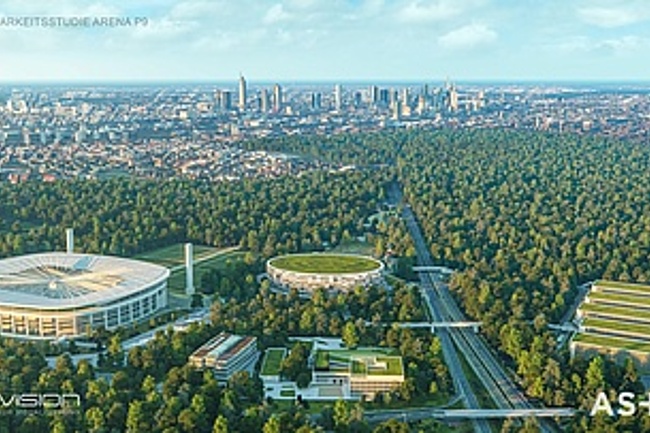
In the case of the A 661, this involves a 1,300-metre-long covering between Bornheim and Seckbach. For decades, the motorway has been considered an urban divide; the covering is expected to reduce this separation and create a continuous green corridor from Günthersburgpark to Huthpark. The city is combining climate policy and transport goals with this project: better fresh air corridors, a higher quality of life, new transport links – and, above all, a reduction in noise and pollution in the neighbouring districts.
At the same time, Frankfurt is focusing on outward growth in the north-west. According to the plans, the "district of neighbourhoods" will accommodate around 6,800 flats for approximately 17,000 residents and around 5,000 jobs. Schools, daycare centres and sports and leisure facilities are also planned. The development measure that has been decided upon follows the so-called eastern variant: compact development is planned east of the A5 motorway, while west of the motorway, the regional green corridor is to be kept permanently open – under the guiding principle of a "co-productive landscape" that is to be further developed in conjunction with agriculture.
Mayor Mike Josef saw the double decision as a sign of political capacity to act after the break-up of the four-party coalition in the summer. He said that "dialogue and compromise" had been organised in the municipal administration and in the Römer, showing that politics "concretely improves the lives of citizens". Head of Planning Marcus Gwechenberger spoke of an "ambitious generational project" on the A 661 and a "decisive contribution" to affordable housing in the north-west. Head of Mobility Wolfgang Siefert emphasised that the enclosure was a response to late 20th century traffic planning; it should significantly reduce noise and particulate matter and at the same time open up new options for pedestrians, cyclists and local transport – including the prospects, mentioned again in the debate, of extending the U4 underground line to Seckbach and a tram connection via Friedberger Landstraße.
The political parties were fundamentally divided on the direction to take, albeit with different emphases. With regard to the north-west, the Greens spoke of a difficult balancing act: external development comes at a "high ecological price", but must be cushioned by high social and environmental standards, broad green corridors and an "agricultural park". The SPD emphasised urban development measures as a tool for ensuring "coherent" planning and limiting land speculation. Volt pushed for more speed and more forms of housing oriented towards the common good. The CDU called for noise protection along the A 661 to be implemented more quickly and for the enclosure to be brought closer to the Riederwald tunnel in terms of timing; It also favoured a different combination of areas for the north-west. The FDP warned that neither the motorway cover nor the new neighbourhoods should be an end in themselves; what is crucial is a viable urban development concept, including infrastructure and refinancing. It remains to be seen how quickly the decisions will be translated into concrete construction work. A final report by DEGES forms the basis for the enclosure; according to the city's expectations, the planning approval process could be completed by the end of the 2020s, with construction then taking place in parallel with the expansion of the A 661 motorway in the 2030s. In the case of the "neighbourhood district", the statutory resolution will be followed by in-depth framework planning; thereafter, development plans will be drawn up and public participation will continue. In both cases, Frankfurt has done one thing above all else: it has given the political go-ahead for projects that will occupy the city for decades to come.